9 Jul 2026
How to Read Football Lineups and Predicted XIs: A Beginner's Guide to Team News
Learn how to interpret confirmed lineups and predicted XIs, understand formation notation, and see how player changes can shape the way a match plays out.
The Difference Between a Predicted XI and a Confirmed Lineup
A predicted XI is an educated guess about which eleven players a manager will field, usually published by journalists or analysts in the days before kickoff. It is based on recent team news, injuries, suspensions, tactical trends, and press conference hints. A confirmed lineup, by contrast, is the official team sheet released by the club roughly an hour before kickoff. The key lesson for beginners is to treat predicted XIs as informed estimates rather than facts—managers often surprise observers with rotation, tactical tweaks, or last-minute fitness decisions. Always wait for the confirmed lineup before drawing firm conclusions.
Understanding Formation Notation and Player Positions
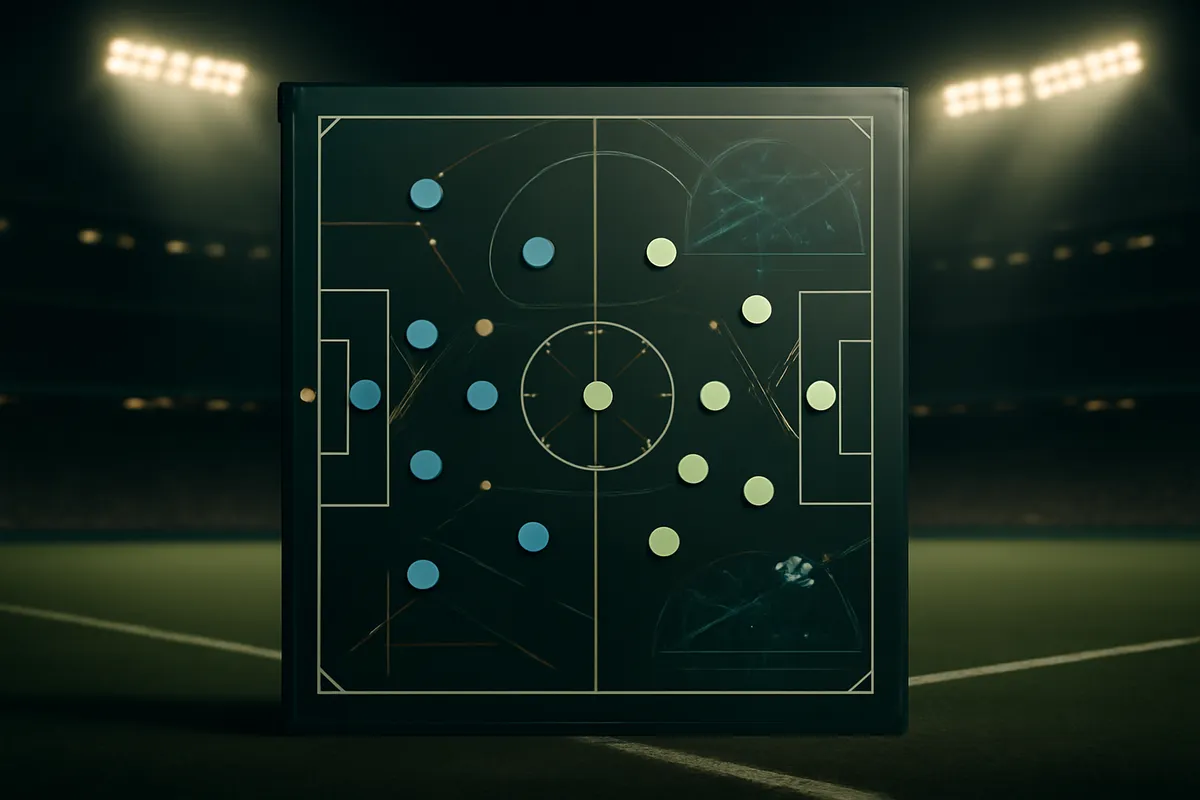
Lineups are often written as a string of numbers, such as 4-3-3, 4-2-3-1, or 3-5-2. These numbers describe how outfield players are arranged from defense to attack, read from the back. In a 4-3-3, for example, there are four defenders, three midfielders, and three forwards, with the goalkeeper always assumed. More detailed notations like 4-2-3-1 split midfield into a deeper pair and a more advanced trio. Remember that the same formation can be played very differently depending on player roles—full-backs may push high, or a striker may drop deep—so formation numbers are a starting point, not the full picture.
Reading Confirmed Team News for Key Signals
When team news is confirmed, look beyond the names to what they signal. Is the first-choice goalkeeper or a key defender missing? Is the team's main creative midfielder starting or on the bench? Note whether a manager has rotated heavily—common before or after cup fixtures and during congested schedules. Also watch for positional clues: a defensive midfielder starting instead of an attacking one often signals a cautious approach, while an extra forward suggests attacking intent. Substitutes matter too, as a strong bench gives a team more options to change a game in the second half.
How Lineup Changes Affect the Way a Match Unfolds
Individual changes can shift a team's balance significantly. Losing a ball-playing center-back may reduce a team's ability to build attacks from the back. Replacing a pacey winger with a more disciplined player can make a side harder to break down but less threatening on the counter. A change in the striker might alter whether a team plays direct long balls or patient possession. When analyzing, ask how each change affects three areas: defensive solidity, midfield control, and attacking threat. Small tweaks in personnel often explain why a match plays out differently than expected.
Context Factors to Combine With the Lineup
A lineup should never be read in isolation. Combine it with context such as the opponent's likely setup, the venue (home or away), recent form, fixture importance, and weather conditions. A weakened lineup against a strong opponent carries different implications than the same lineup against a struggling side. Managers also adapt their approach based on the scoreline they need—a team chasing a result may field a more attacking XI. Understanding these surrounding factors helps you interpret why a manager selected a particular eleven and how the match might develop.
Practical Tips for Interpreting XIs Like an Analyst
Start by identifying the formation and any surprise inclusions or omissions. Compare the confirmed XI with the predicted one to spot tactical decisions. Look up unfamiliar players' natural positions to understand their likely role. Track patterns over several matches to learn how a specific manager rotates and adapts. Finally, stay flexible: in-game substitutions and injuries can reshape a match within minutes, so use the lineup as a framework for expectations rather than a fixed prediction. Over time, this habit will sharpen your ability to read matches before they even begin.
Related pre-match analysis
Keep reading
Analysis: PK Sport · our methodology
Analysis based on public data and market signals. For analysis only — not betting advice.