16 Jul 2026
How to Assess Injuries, Suspensions and Late Team News in Brasileirão Série B Predictions
Team availability can change a Série B match forecast more than recent results or league position. Assess who is absent, who replaces them, and whether late news changes the team’s structure rather than simply counting missing players.
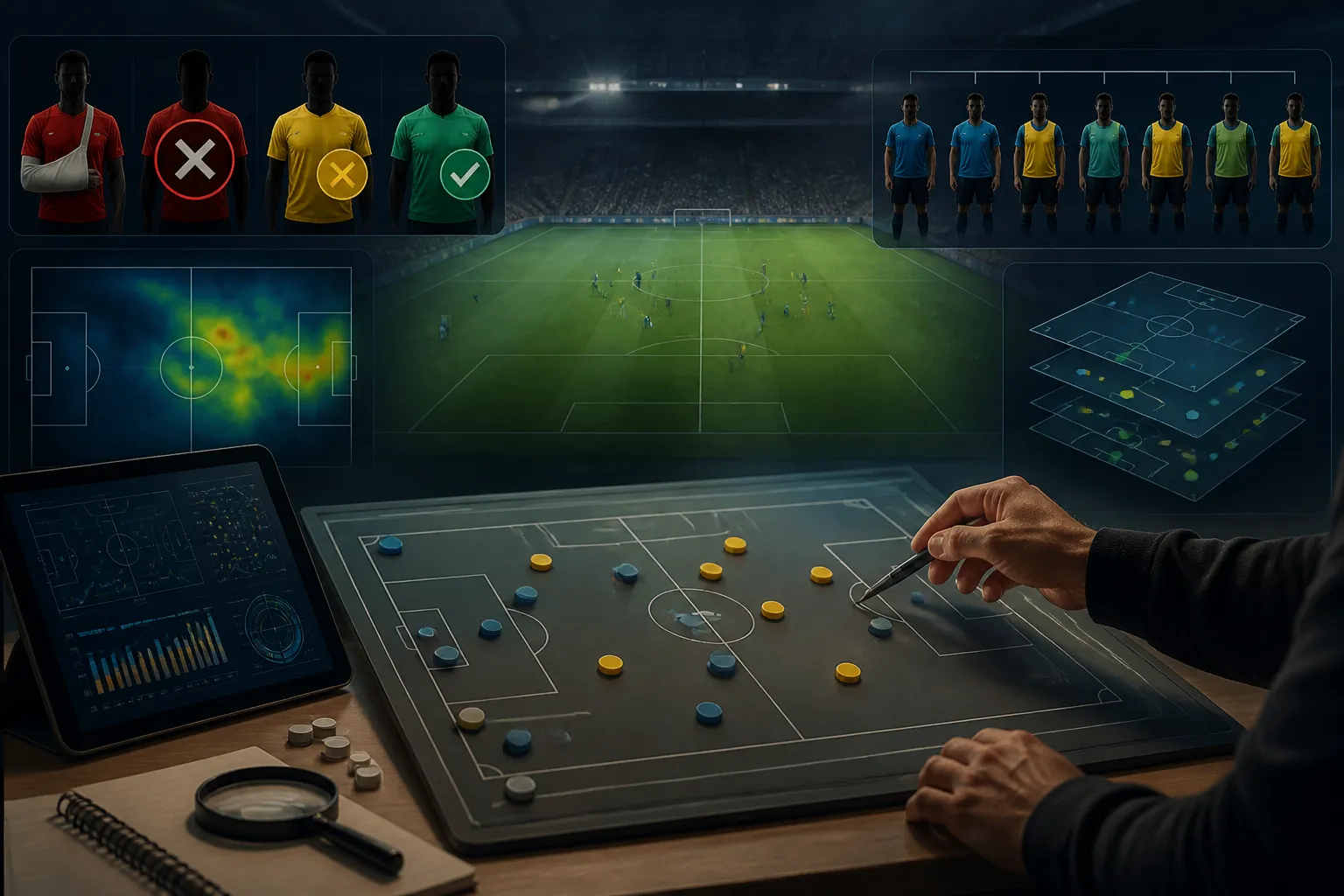
Start with a reliable availability list
Build a list of confirmed absences before judging a match. Check club medical updates, official squad lists, post-match interviews, training reports and the competition’s disciplinary notices. Separate players into confirmed out, suspended, doubtful and returning. A player described as recovering or training separately is not automatically available for 90 minutes. In Série B, travel, packed fixtures and limited recovery time can keep a nominally fit player on the bench.
Judge the importance of the absent player by role
Do not treat every starter as equally difficult to replace. A goalkeeper who saves shots at a high rate, a centre-back who organizes the defensive line, a defensive midfielder who covers transitions, or a striker responsible for a large share of goals has a larger effect than a replaceable wide player. Check the player’s minutes, starts, goals and assists, but also their tactical job. If a team relies on long passes to a target forward, losing that forward can alter the whole attack even when his scoring record is modest.
Check suspension details and likely replacements
Suspensions are usually easier to confirm than injuries, but the replacement still needs analysis. Review the league’s official disciplinary information for red cards and accumulated yellow cards, since the applicable threshold and timing follow the competition regulations. Then identify the likely substitute using recent line-ups, bench appearances and reserve options. A team may replace a suspended right-back with another specialist, move a centre-back wide, or switch formation. Those choices create different strengths and weaknesses.
Measure squad depth with evidence, not reputation
Squad depth means more than the number of players listed in the squad. Compare the replacement’s recent minutes, experience at the position, physical condition and output with the absent player’s. Examine performance in previous matches without the regular starter where the sample is useful. Série B squads often have uneven depth: a club may cope well with one midfield absence but struggle if two defenders or its main striker are unavailable. Also note whether the replacement is a youth player, a recent signing without match fitness, or a veteran returning from a long layoff.
Read late team news in tactical context
The most useful late news concerns the expected starting XI, formation and player restrictions. A coach may confirm that a returning player can only play part of the match, or reveal a switch from a back four to three centre-backs. Compare that plan with the opponent’s style. Missing a ball-winning midfielder matters more against a side that attacks quickly through central areas; missing aerial defenders matters more against a team that creates many crosses and set pieces. Treat unverified social-media claims cautiously and update a forecast only when a credible source supports the report.
Avoid double-counting availability problems
Absences often overlap. If a team loses its starting left-back and a winger who provides defensive cover, the left side may be exposed, but that should be assessed as one structural weakness rather than two unrelated penalties. Likewise, a missing creator and striker may reduce chance creation and finishing, yet the effect depends on who replaces them and how the coach adapts. Finish with a simple comparison: which team loses more proven minutes, which has the weaker replacement, and which tactical area changes most. That produces a clearer prediction than reacting to a headline about one unavailable player.
Related pre-match analysis
Keep reading
Analysis: PK Sport · our methodology
Analysis based on public data and market signals. For analysis only — not betting advice.