27 Aug 2026
How VAR works in football: rules, reviews and on-field decisions
VAR is an officiating support system used to review incidents that could change the outcome of a match. Find out when it can be used, who makes the decision and why not every contact is reviewed.
What is VAR?
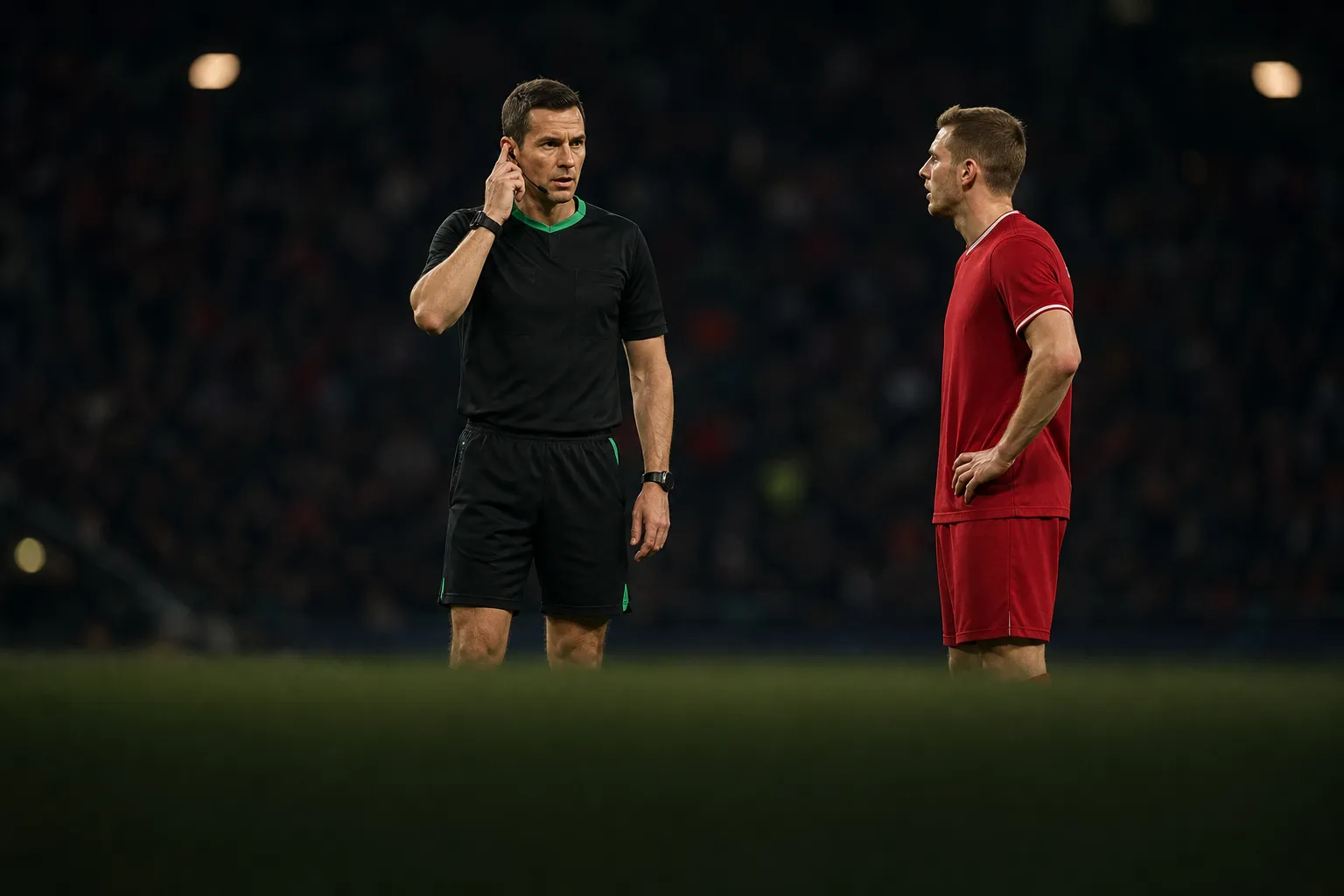
VAR stands for Video Assistant Referee. The VAR team works in an operations room with access to different broadcast angles. The on-field referee remains responsible for the match and makes the final decision, even when assisted by video.
Which incidents can VAR review?
The protocol allows reviews in four situations: a goal or an offside in the build-up to a goal, a penalty or possible penalty, a direct red card and a case of mistaken identity. VAR does not review every foul, corner or throw-in. The incident must fall into one of these categories and involve a possible clear and obvious error.
How does a review begin?
The VAR team monitors the match in real time and checks incidents that are eligible for review. If no error is found, play continues. When it identifies a possible mistake, it informs the referee and analyses the footage. In some cases, VAR recommends an on-field review; in others, it confirms the initial decision without calling the referee to the monitor.
What does “clear and obvious error” mean?
VAR intervention is not intended to replace every interpretation made by the referee. Video is used when there is an obvious mistake or a serious incident that was missed. When contact leaves room for interpretation, the referee may uphold the original decision. The review considers the whole incident, the intensity of the contact, the players’ positions and the context of the play.
How does an on-field review work?
When the referee goes to the monitor, they watch the best available angles and may review the incident at normal or slow speed. They then decide whether to uphold or change the call. Communication between the VAR and the referee takes place by radio. The image shown in the stadium or broadcast helps the public follow the process, but the decision is not made by a vote or by consulting supporters.
Why does VAR still cause confusion?
Cameras can clarify the point of contact, a player’s position or whether the ball went out, but they do not eliminate all interpretation. Offside decisions rely on virtual lines and the exact moment the pass is made. For fouls and penalties, assessing the intensity of contact remains a human judgment. VAR reduces major errors, but it does not turn refereeing decisions into a completely automated science.
Related pre-match analysis
Keep reading
Analysis: PK Sport · our methodology
Analysis based on public data and market signals. For analysis only — not betting advice.