21 Aug 2026
How VAR works in football: rules, reviews and the referee’s decision
VAR is the video assistant referee system used to review incidents that could change a match. It does not replace the on-field referee and only intervenes in situations covered by the Laws of the Game.
What is VAR
VAR stands for Video Assistant Referee. A team of officials monitors the match using footage from several cameras in an operations room. The aim is to help the on-field referee correct a clear and obvious error or identify a serious incident that went unnoticed.
Which incidents can be reviewed
The VAR protocol limits reviews to four types of incident: goals, penalties, direct red cards and mistaken identity. For a goal, for example, the team checks for possible offences during the build-up, offside, the ball going out of play and infringements by the goalscorer. Yellow cards, corners and throw-ins are not reviewed in isolation.
How a check begins
After a relevant incident, the VAR reviews the footage while play continues whenever possible. This is known as a silent check. If there is no clear error, the referee does not stop the match. If the video team spots a possible mistake, it informs the referee and recommends a review.
When the referee goes to the monitor
For subjective incidents, such as a foul or handball in the penalty area, the referee will usually watch the footage on the pitch-side monitor. This is known as an on-field review. After reviewing the incident, the referee either confirms or changes the decision. For objective calls, such as offside or the ball going out of play before a goal, the VAR can communicate the decision without requiring a monitor review.
Who makes the final decision
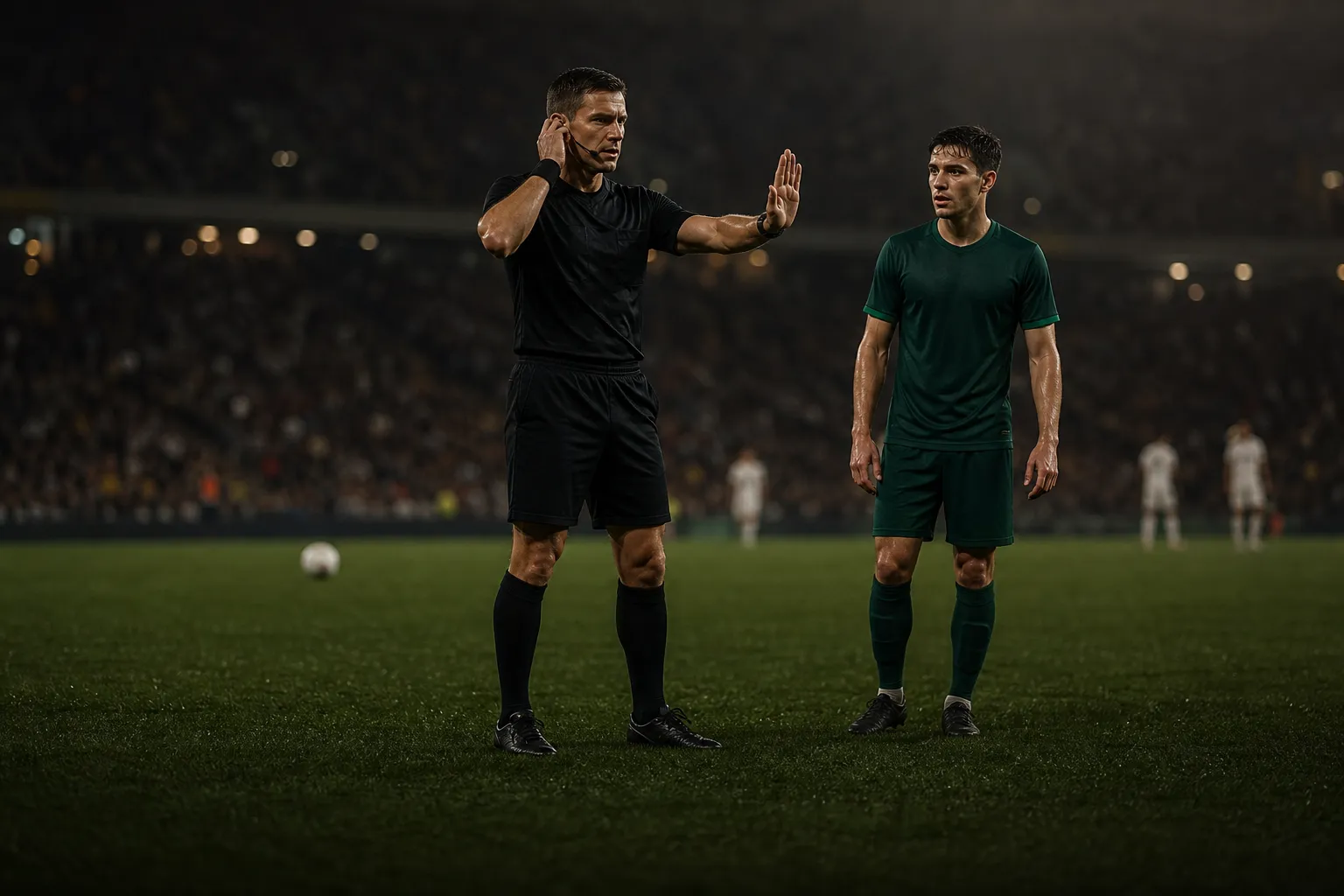
The final decision always belongs to the on-field referee. VAR reports what it has found, shows the best angles and identifies a possible error, but it does not referee the match. Even after a monitor review, the referee may uphold the original decision if they believe the footage does not prove a clear and obvious error.
Why some reviews take longer
Reviews take longer when the team needs to identify the exact start of an attacking phase, analyse contact between players or draw offside lines. In a possible goal situation, the review may involve several steps before the finish. The protocol aims for accuracy, but communication with the public and the speed of the operation vary depending on the competition and the facilities available.
Related pre-match analysis
Keep reading
Analysis: PK Sport · our methodology
Analysis based on public data and market signals. For analysis only — not betting advice.