19 Jul 2026
How to Read the Current Liga MX Table: Points, Tiebreakers, Liguilla and Coefficients
The Liga MX table changes every matchweek, but its rules stay familiar. This guide explains how to check the Apertura or Clausura standings, read the columns correctly, apply tiebreakers and identify the Liguilla places.
Check the right tournament and matchweek
Liga MX runs two league tournaments each season: Apertura, usually played in the second half of the calendar year, and Clausura, usually played in the first half. Each tournament has its own 17-match regular-season table. When checking standings, first confirm whether the page says Apertura or Clausura, the current jornada (matchweek), and whether every club has played the same number of matches. A team with fewer games may be below a rival despite having a better points-per-game record.
Read the main columns in the table
The standard table lists PJ or J for matches played, G for wins, E for draws, P for losses, GF for goals scored, GC for goals conceded, DG for goal difference, and PTS for points. A win gives three points, a draw gives one and a loss gives none. Goal difference is calculated by subtracting goals conceded from goals scored. For example, a club with 24 GF and 17 GC has a +7 goal difference. Points decide the initial ranking; goal difference does not replace points.
Understand Liga MX tiebreakers
When clubs finish level on points, Liga MX normally separates them first by goal difference and then by goals scored. If they remain tied, the regulations can use results between the tied clubs, away goals, coefficient-table position, fair-play records and, as a last option, a draw. The exact order is set in the competition regulations for that season, so use the official Liga MX standings and regulations if a tie affects qualification. Head-to-head records can be harder to apply when three or more clubs are level because the league may create a mini-table using only those matches.
Identify Liguilla and Play-In positions
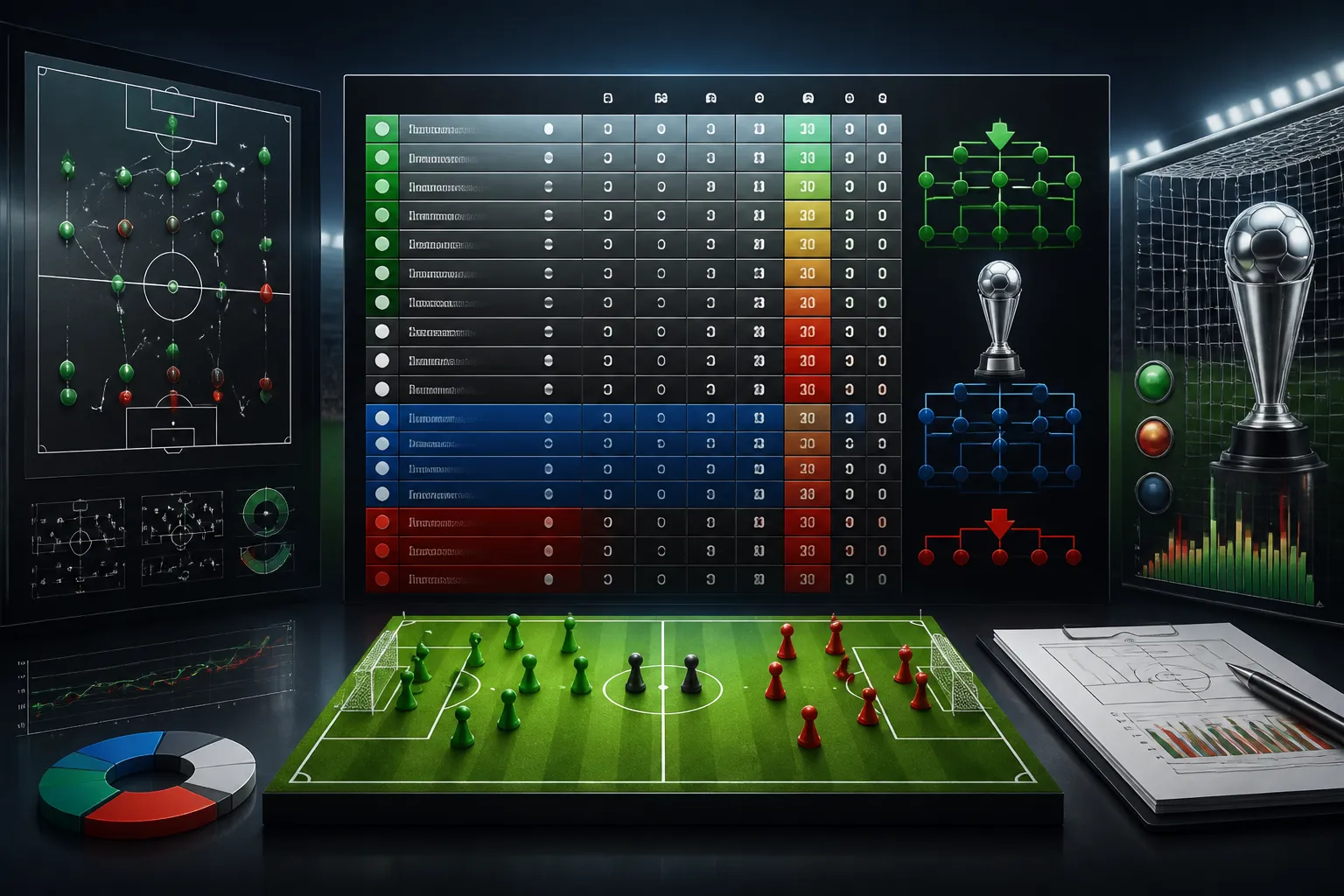
After the 17-match regular season, the top six clubs qualify directly for the Liguilla quarter-finals. Teams in seventh through 10th enter the Play-In. Seventh plays eighth, with the winner taking the seventh seed. Ninth plays 10th, and that winner faces the loser of seventh versus eighth for the eighth and final Liguilla place. The quarter-final pairings are 1st versus 8th, 2nd versus 7th, 3rd versus 6th and 4th versus 5th. The Liguilla then continues through semi-finals and a final. A table page may label these zones as Liguilla Directa, Play-In and Eliminated.
Separate the regular-season table from the coefficient table
The general table decides qualification for that tournament’s Play-In and Liguilla. The tabla de cociente, also called the coefficient or quotient table, is different. It measures points per match across the set of seasons defined by Liga MX regulations, often using several recent Apertura and Clausura tournaments. The formula is total points divided by total matches played. For example, 102 points from 90 matches produces a coefficient of 1.133. Clubs with fewer seasons in the division need their total adjusted by the matches they have actually played.
Know what the coefficient currently means
Liga MX has suspended the traditional automatic relegation and promotion system for periods set by its member clubs and regulations. During those periods, the lowest coefficient positions may instead carry financial sanctions or other league measures rather than immediate relegation. This can change when Liga MX updates its rules. Do not assume that the club at the bottom of the coefficient table is automatically relegated. Check the current season’s official competition regulations for the applicable sanctions, the number of seasons included and any special rules for promoted or newly admitted clubs.
Related pre-match analysis
Keep reading
Analysis: PK Sport · our methodology
Analysis based on public data and market signals. For analysis only — not betting advice.